EXBATT
    EXBATT
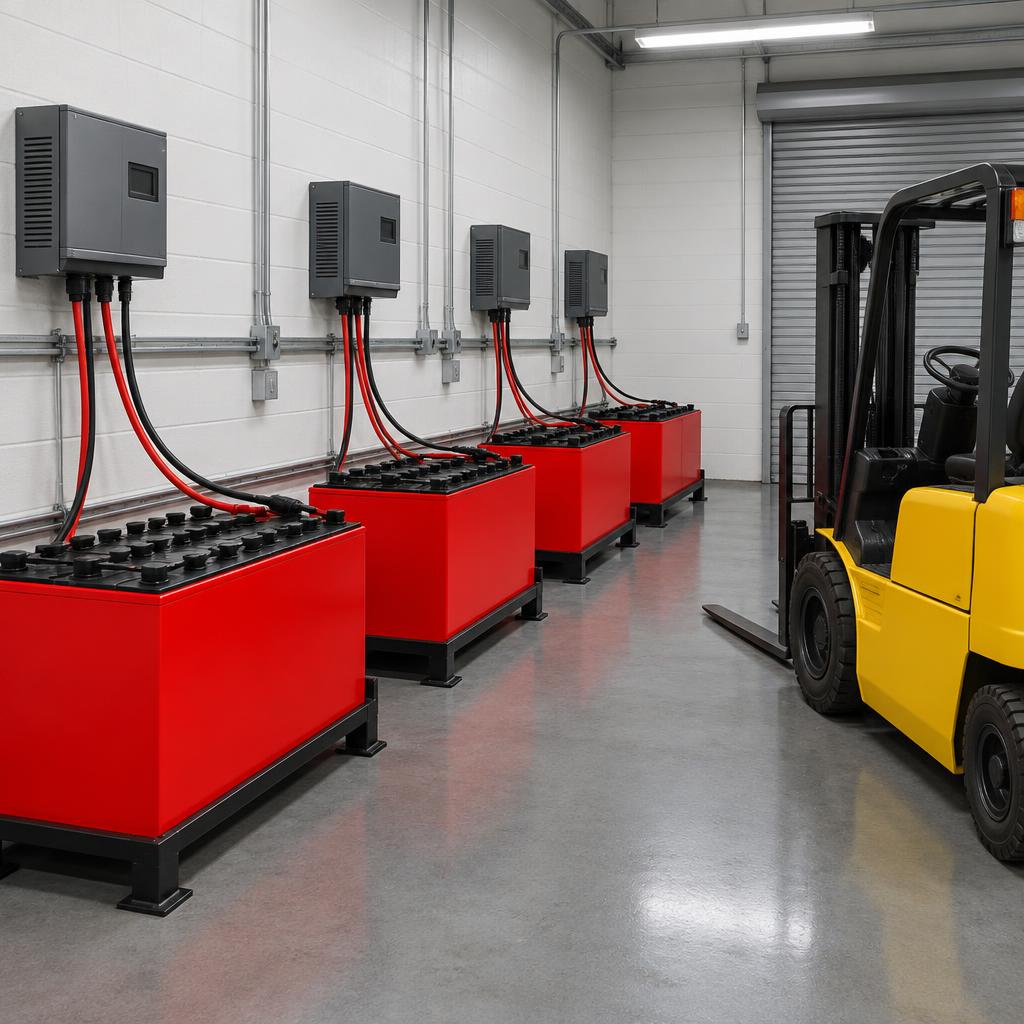
    Forklift traction battery trays on charging stands in a warehouse battery room.
    Products / Motive power

    Forklift batteries that finish the shift.

    Traction batteries, chargers and battery room equipment for electric forklifts and warehouse trucks, supplied, tested and replaced by our own service teams in Kosova and Albania.

    Short answer

    A forklift traction battery is a deep cycling battery built to be discharged and recharged every working day, and in a counterbalance truck it also acts as part of the counterweight. Most fleets in the region run tubular lead acid trays in 24, 48 or 80 volt, which remain the lowest cost and the safest weight for single shift work. Lithium iron phosphate suits two and three shift operations where the truck can be charged during breaks instead of swapping batteries. EXBATT supplies both, sizes the tray to the truck and the shift pattern, and keeps the fleet running with charging, watering, testing and cell replacement.

    Tubular lead acid

    The working standard for single shift fleets.

    Two volt tubular cells assembled into steel trays in 24, 48 and 80 volt, built to the truck opening and to the weight the chassis needs for stability. Around 1500 cycles at 80 percent discharge, with individual cells replaceable instead of the whole tray.

    24 / 48 / 80 VBuilt to the tray openingSingle cells replaceable
    Lithium conversion

    For two and three shift operations.

    Lithium iron phosphate trays charge during breaks, need no watering and no battery changing room, and hold voltage to the end of the shift. Ballast is added where the truck needs the weight, and the charger and truck electronics are matched before delivery.

    Charge on breaksNo wateringNo battery swap room
    Charging and battery room

    Chargers, watering and connectors.

    High frequency chargers matched to the tray, central watering systems, high current connectors, cables, changing stands, acid resistant flooring and ventilation sized to the charging current.

    High frequency chargersCentral wateringVentilation sized
    Service

    Testing, cell replacement and buy back.

    Capacity and discharge testing to find the weak cell before it strands a truck, single cell replacement, connector and cable repair, and collection of spent batteries with disposal records and scrap buy back.

    • —Discharge and capacity testing
    • —Single cell replacement on site
    • —Charger service and repair
    • —Collection, disposal records, scrap buy back

    Frequently asked

    Should a forklift keep lead acid or move to lithium?
    It follows the shift pattern. One shift a day, with the truck standing overnight, is the case tubular lead acid was built for, and it stays the cheapest option per year of service. Two or three shifts, or a fleet that cannot afford a battery changing room, is where lithium pays back through charging on breaks.
    Why does the battery weight matter on a forklift?
    In a counterbalance truck the battery sits behind the mast and carries part of the counterweight. A lighter battery in the same tray reduces the rated load the truck may lift, so lithium conversions are delivered with ballast to reach the weight given on the truck plate.
    How long does a traction battery last?
    A tubular lead acid tray that is charged fully, watered on schedule and not left discharged typically gives 5 to 7 years in single shift work. Lithium is normally specified for 3000 cycles or more. In both cases charging discipline and temperature decide the result more than the purchase price.
    Can one weak cell be replaced instead of the whole battery?
    Yes, on lead acid trays, and it is usually the right decision when the rest of the cells test evenly and the tray is in the first half of its life. Where several cells have already dropped, a replacement is the honest answer and we say so.

    Related

    Last reviewed:

    Not sure which fits?

    Tell us the load, the site, and the constraints. We'll size the right system.