EXBATT
    EXBATT
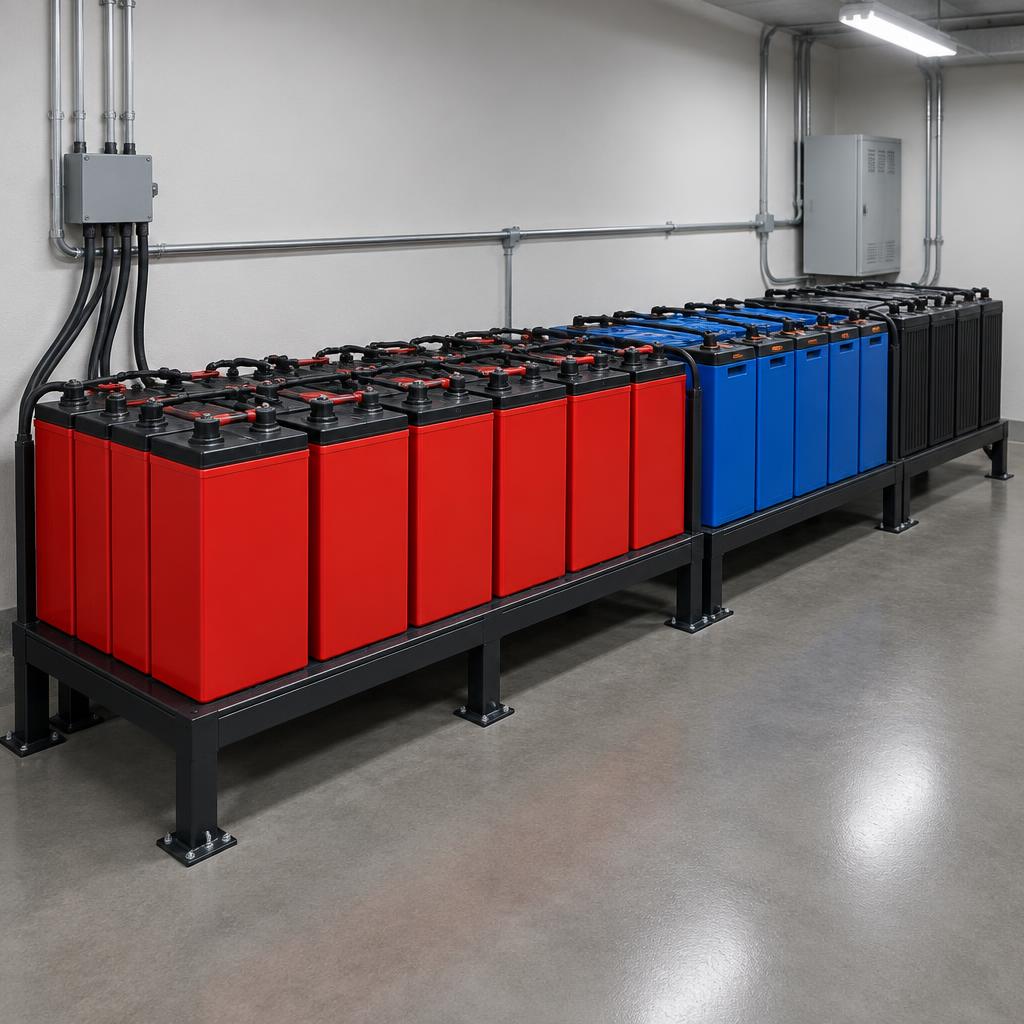
    Range of industrial batteries, from flooded lead-acid cells and sealed VRLA blocks to lithium-ion rack modules.
    Products / Battery Technologies

    Industrial batteries, matched to the duty cycle.

    VRLA, flooded lead-acid, TPPL, and lithium-ion. EXBATT works with a curated group of established battery manufacturers, then specifies the technology that fits the actual duty cycle, not a catalog page.

    Short answer

    An industrial battery is a stationary or motive power battery built for deep cycling, long design life, and continuous standby duty. EXBATT works with a curated group of established manufacturers and selects, sizes, installs, and maintains VRLA AGM and GEL, flooded tubular OPzS, valve regulated OPzV, TPPL, and lithium iron phosphate batteries for telecom, substation, data center, industrial, and residential systems across Kosova, Albania, and the wider Western Balkans. The chemistry and brand follow the case, never the other way around.

    VRLA (AGM / GEL)

    Sealed lead-acid for standby duty.

    Valve-regulated AGM and GEL batteries for UPS strings, telecom cabinets, and substation control rooms. Maintenance-free, upright or side-mount, sized for the required autonomy.

    AGMGELUPS stringsTelecom cabinets
    Flooded lead-acid

    Long service life for utility and heavy standby.

    OPzS and OPzV vented cells for substation batteries, switchgear tripping supplies, and long-autonomy DC plants. Twenty-year design life when maintained correctly.

    OPzS / OPzVSubstation DC20-year design life
    TPPL

    Thin-plate pure lead for cycling and PSoC.

    Thin-plate pure lead where high cycling, partial state of charge operation, fast recharge, or a small footprint decide the design. Delivered as front-terminal and cabinet solutions, engineered by EXBATT around proven manufacturer platforms.

    High cyclingPartial state of chargeFast recharge
    Lithium-ion

    Lithium where weight, cycles, or footprint decide.

    Rack and cabinet lithium systems with integrated BMS for telecom, C&I, and hybrid sites. Chemistry, thermal design, and BMS chosen to match the site, not a one-size-fits-all SKU.

    Rack systemsIntegrated BMSHybrid sites
    Technology partners

    Curated manufacturers, one accountable engineering partner.

    EXBATT is not tied to a single supplier. We work with a curated group of established battery and power electronics manufacturers, and select the platform that fits the case: duty cycle, temperature, autonomy, footprint, and total cost of ownership. EXBATT stays accountable for sizing, installation, testing, and service through the whole life of the system.

    • Technology chosen per case, not per catalog
    • Established manufacturers, verified quality
    • Single point of engineering accountability
    Lifecycle

    Specified, installed, tested, maintained.

    Sizing based on autonomy, temperature, and load profile. Installation and commissioning to manufacturer spec. Impedance and load-bank testing throughout life. End-of-life removal handled responsibly.

    • Autonomy and load studies
    • Commissioning to manufacturer spec
    • Scheduled impedance and load-bank tests
    • Compliant end-of-life removal

    Frequently asked

    Which battery type lasts longest?
    Flooded tubular OPzS has the longest design life, typically 15 to 20 years at 20 degrees Celsius, followed by OPzV and lithium iron phosphate at 10 to 15 years. VRLA AGM sits at 5 to 12 years depending on grade. Real life depends far more on temperature and float voltage than on the label.
    Should I choose lithium or lead acid?
    Lithium iron phosphate wins where cycling is daily, space and weight are limited, or high recharge rates matter. Lead acid remains the economical choice for pure standby duty with rare discharges, and it tolerates a wider range of installed conditions with simpler protection.
    How do you size a battery string?
    From four inputs: the load in kilowatts or amperes, the required autonomy in minutes or hours, the system voltage, and the minimum end voltage the load accepts. Temperature, ageing margin, and future load growth are then applied before selecting a capacity.

    Related

    Not sure which fits?

    Tell us the load, the site, and the constraints. We'll size the right system.