EXBATT
    EXBATT
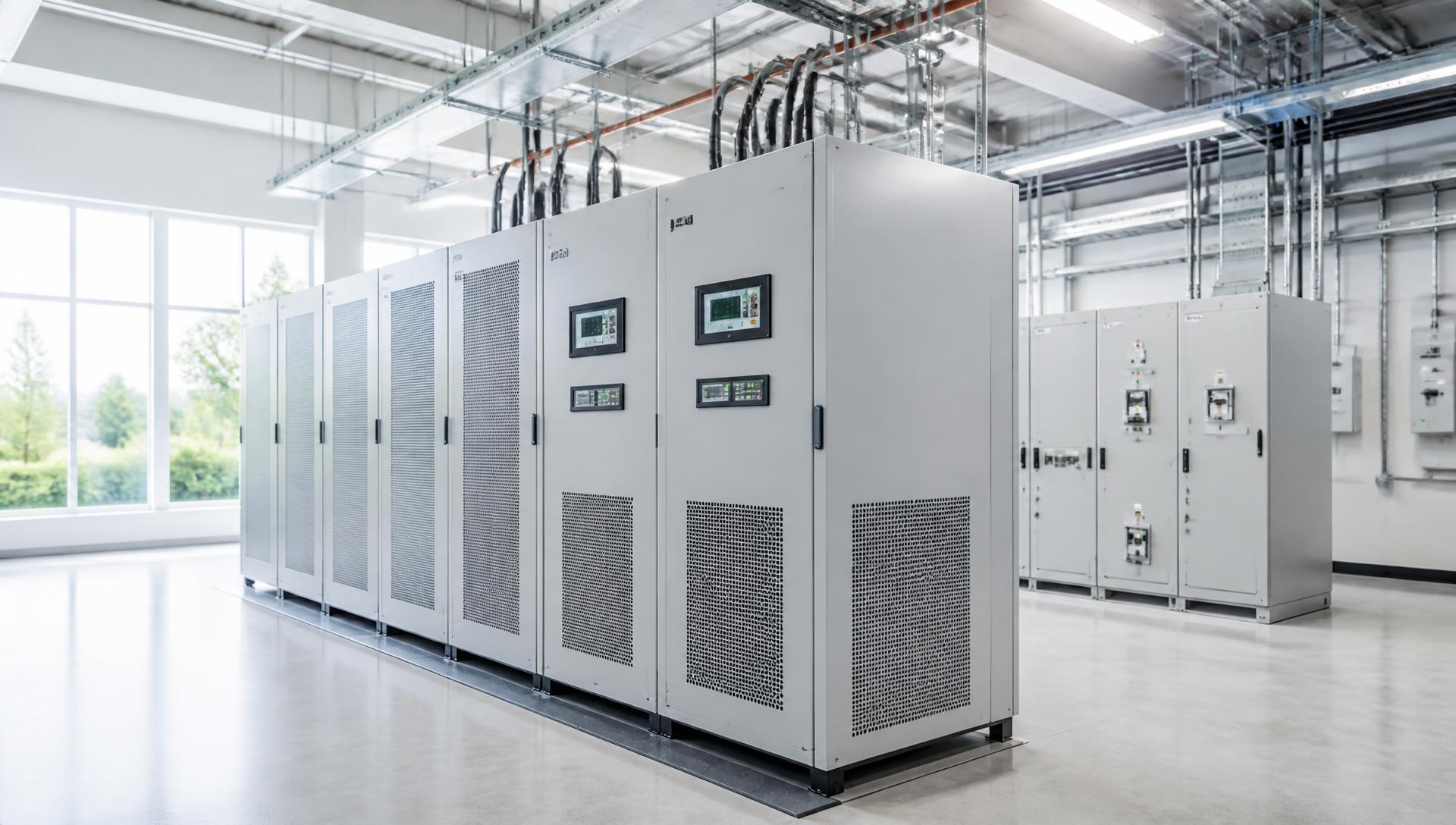
    UPS and power conversion cabinets in a clean electrical room.
    Products / Power Conversion

    UPS, rectifiers, and inverters, for loads that can't wait.

    Online double-conversion UPS from edge cabinets to megawatt-class modular frames, DC rectifier plants, and industrial inverters. Sized for telecom rooms, data halls, substations, and process control.

    Short answer

    Power conversion equipment moves energy between AC and DC and holds it within the tolerance the load requires. EXBATT supplies and services online double conversion UPS, telecom and substation rectifier systems, inverters, DC distribution, and static transfer switches, engineered around the battery and the load rather than sold as a catalogue item.

    One-phase UPS

    Single-phase protection for edge and small IT.

    Online double-conversion tower and rack-mount UPS from 1 to 20 kVA. For branch offices, retail sites, medical rooms, and network closets. Extended runtime battery cabinets sized to the load.

    1–20 kVATower and rackExtended runtime
    Three-phase UPS

    Three-phase systems for critical facilities.

    Three-phase online UPS from 10 kVA to hundreds of kVA for MSCs, data halls, hospital blocks, and industrial process rooms. High input power factor, low input harmonics, and wide input voltage window.

    10–500 kVAHigh input PFLow harmonics
    Modular UPS

    Hot-swappable modules, scalable to MW-class.

    Modular frames with hot-swappable power modules for pay-as-you-grow data halls and industrial facilities. N+1 redundancy inside a single frame, parallel frames for MW-class critical loads.

    Hot-swap modulesN+1 redundancyParallel frames
    DC rectifier systems

    Rectifier plants for -48V and telecom DC.

    Modular rectifier shelves, controllers, and battery management for telecom central offices, base station hubs, and industrial DC loads. Sized for future capacity, not just today.

    -48V DCHot-swap modulesRemote monitoring
    Industrial inverters

    DC-to-AC where continuity is non-negotiable.

    Industrial inverters for substation auxiliaries, process control, and safety systems. Fed from station batteries, delivering clean AC through disturbances.

    Substation auxSafety systemsClean sine output

    Frequently asked

    What is the difference between a UPS and a rectifier?
    A UPS feeds AC loads and holds them through an outage with no interruption. A rectifier feeds a DC bus, typically 48 V in telecom or 110 and 220 V in substations, where the battery is permanently connected in parallel and supports the load directly.
    Which UPS topology should be specified?
    Online double conversion for IT, medical, and process loads, because output is regenerated and transfer time is zero. Line interactive is acceptable for small office and network loads on a reasonably stable supply. Offline is for non critical equipment only.
    How is UPS capacity chosen?
    Measure or calculate the real load in kilowatts, add inrush headroom and planned growth, then confirm the required autonomy separately since it drives the battery, not the UPS rating. Oversizing a UPS lowers efficiency without adding runtime.

    Related

    Not sure which fits?

    Tell us the load, the site, and the constraints. We'll size the right system.